Complete-Machine Perspective
Machine architecture, subsystem integration, and operating requirements are considered together rather than as isolated consulting tracks.

ENGINEERING & OEM INTEGRATION
HeavyTech supports machine-level engineering across vehicle architecture, powertrain systems, thermal management, electrical systems, software, controls, sensing, machine intelligence, prototype integration, and validation according to program scope.
MACHINE-LEVEL ENGINEERING
OEM INTEGRATION
PROTOTYPE DEVELOPMENT
SOFTWARE AND CONTROLS
ORIGIN INTEGRATION
VALIDATION
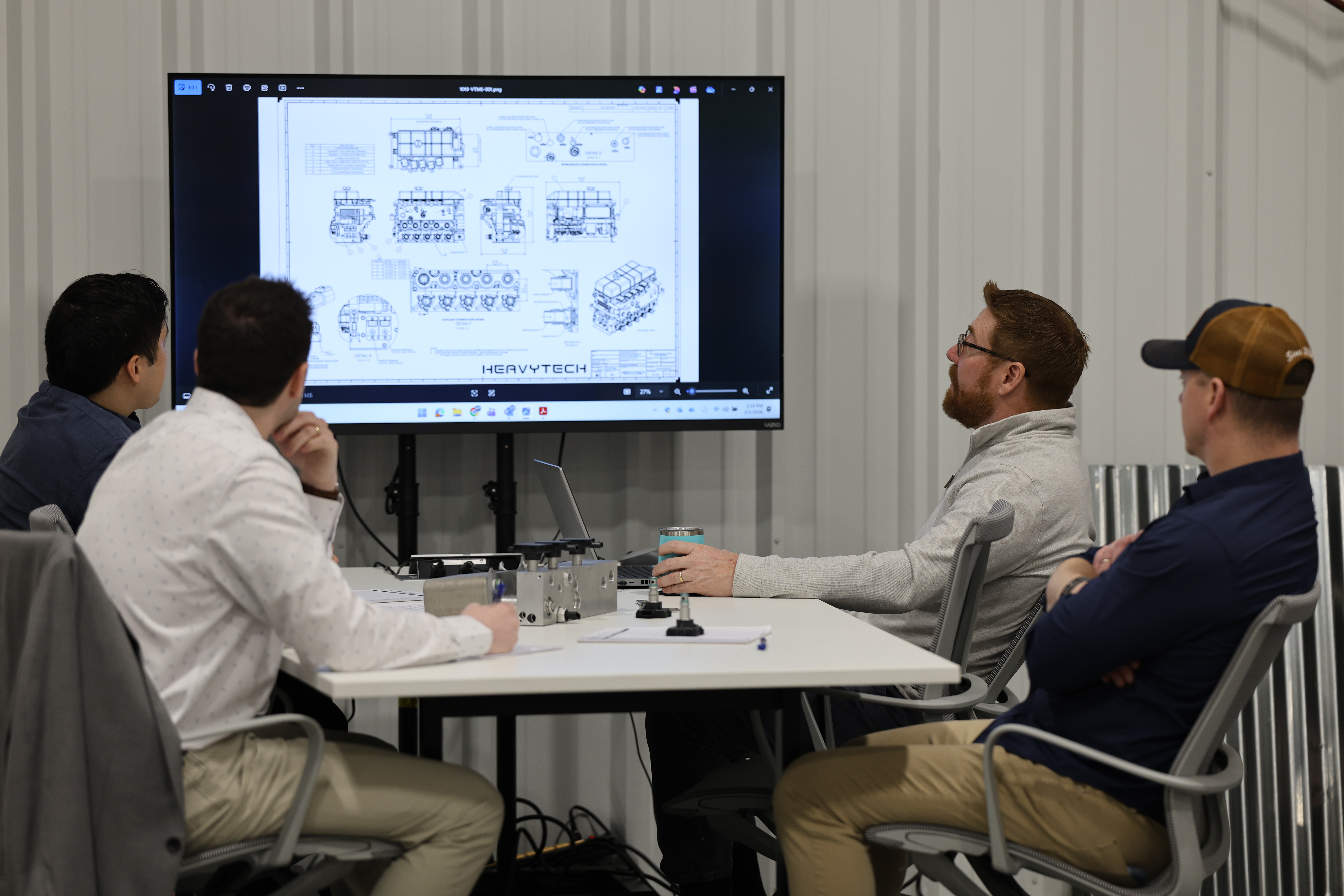
Machine development, integration, and validation imagery
Asset ID: ENGINEERING-HERO-PENDING
MACHINE-LEVEL ENGINEERING
HeavyTech develops complete off-highway machines and the technology platforms behind them. Engineering programs can account for mechanical, electrical, thermal, software, sensing, control, operator, service, and production requirements together.
Engineering engagement is program specific and defined by machine, application, and integration scope.
Machine architecture, subsystem integration, and operating requirements are considered together rather than as isolated consulting tracks.
Mechanical, electrical, controls, and software decisions are coordinated with machine behavior and service constraints.
Engineering assumptions are evaluated on physical machines through installation, calibration, and real-world validation loops.
Software-defined machine behavior, diagnostics, and calibration workflows are integrated with hardware and operator pathways.
ORIGIN pathways can be integrated where applicable without implying all engagements are ORIGIN programs.
Engineering outputs inform validation and production planning activities without promising production launch outcomes.
The exact HeavyTech role depends on the machine, application, existing customer team, program maturity, and integration scope.
WHY INTEGRATION MATTERS
Subsystem decisions create machine-level tradeoffs. Engineering programs coordinate these tradeoffs so architecture, controls, software, operator workflows, and validation remain aligned.
MACHINE-LEVEL INTEGRATION RELATIONSHIP
Machine Requirements
Program requirements define machine priorities, constraints, and integration goals.
Vehicle Architecture
Architecture choices establish packaging, service access, and subsystem interface boundaries.
Powertrain, Thermal, Electrical, and Work Systems
Core physical systems are integrated as a coordinated machine stack rather than isolated subsystems.
Software, Controls, and ORIGIN
Digital systems are integrated with machine hardware and operating requirements where applicable.
Operator, Service, and Engineering Interfaces
Operator pathways, diagnostics, and service interfaces are aligned with machine-system behavior.
Prototype Integration and Validation
Prototype build, integration, and validation loops refine the program without implying guaranteed outcomes.
Integration sequence from requirements to validation
Public-safe relationship view of how engineering decisions connect across physical and digital machine systems.
Machine Requirements
Program requirements define machine priorities, constraints, and integration goals.
Vehicle Architecture
Architecture choices establish packaging, service access, and subsystem interface boundaries.
Powertrain, Thermal, Electrical, and Work Systems
Core physical systems are integrated as a coordinated machine stack rather than isolated subsystems.
Software, Controls, and ORIGIN
Digital systems are integrated with machine hardware and operating requirements where applicable.
Operator, Service, and Engineering Interfaces
Operator pathways, diagnostics, and service interfaces are aligned with machine-system behavior.
Prototype Integration and Validation
Prototype build, integration, and validation loops refine the program without implying guaranteed outcomes.
Powertrain architecture influences packaging, cooling strategy, and service access across the machine.
Electrical architecture affects software integration, diagnostics, and supported machine-control workflows.
Camera placement decisions interact with structure, visibility, maintenance pathways, and operator environments.
Operator controls and ORIGIN information pathways depend on coordinated integration with vehicle systems.
Mechanical, hydraulic, electrical, and control-system interfaces must be developed together for work-tool behavior.
Configuration, testing, and documentation considerations affect how prototypes evolve toward production planning.
Integration relationships are program specific and do not imply a universal architecture or identical solution on every engagement.
ENGINEERING CAPABILITY OVERVIEW
HeavyTech capability scope is tailored to program needs. Not every project includes every capability group.
Machine-level structure, packaging, interfaces, service access, operator requirements, and technology integration.
Hybrid and electric powertrain development coordinated with hydraulics, controls, thermal systems, packaging, and application duty.
Machine-level thermal engineering across powertrain, electronics, hydraulics, airflow, packaging, and operating environments.
Power distribution, controllers, sensing, displays, networks, diagnostics, wiring, and supported machine interfaces.
Machine functions, diagnostics, calibration, data logging, controls, operator interfaces, and engineering workflows.
Certified hardware, supported camera systems, runtime configuration, calibration, machine-intelligence outputs, and vehicle-system integration.
Physical fabrication, installation, wiring, integration, configuration, and prototype iteration.
Requirements, test planning, diagnostics, workshop evaluation, field evaluation, configuration control, sourcing, support, and future production requirements.
Capability groups describe engineering scope areas and are not fixed service packages, schedule commitments, or production-readiness guarantees.
ENGINEERING SERVICES
HeavyTech supports machine-development and integration programs across vehicle architecture, powertrain, thermal systems, electrical systems, software, controls, sensing, prototype integration, and validation.
PROGRAM-SPECIFIC SERVICE SCOPE
Machine-level architecture, structure, packaging, interface definition, component placement, operator access, service access, and technology integration development.
Scope status: Engineering Capability
Hybrid and electric development coordinated with drive systems, hydraulic work systems, machine packaging, controls, thermal coordination, and application duty expectations.
Scope status: Program Specific
Thermal-system engineering across powertrain, electronics, hydraulics, airflow, packaging, operating environment, controls, and diagnostics requirements.
Scope status: Program Specific
Power distribution, controllers, sensing, wiring, displays, diagnostics, and supported machine-interface development for integrated machine systems.
Scope status: Engineering Capability
Machine functions, operating modes, diagnostics, calibration, configuration, data logging, operator interfaces, and engineering-tool integration support.
Scope status: Custom Integration
Supported camera systems, ORIGIN Certified Hardware, ORIGIN Runtime, calibration, diagnostics, machine-intelligence outputs, and operator or vehicle-interface integration.
Scope status: Custom Integration
Fabrication, installation, wiring, mounting, configuration, prototype iteration, and machine integration support for machine-specific programs.
Scope status: Prototype Development
Requirements, diagnostics, workshop evaluation, representative field testing, configuration control, sourcing and assembly planning, and support or deployment requirements.
Scope status: Active Development
The exact HeavyTech role depends on the machine, application, customer team, program maturity, existing architecture, and agreed engineering scope.
Programs may involve one focused discipline or a coordinated combination of machine, software, controls, sensing, integration, and validation work.
ENGAGEMENT MODELS
HeavyTech engineering programs may begin with a focused technical study, progress through collaborative prototype integration, or expand into a broader machine-development program.
Focused evaluation of a machine, subsystem, architecture, integration challenge, or development decision.
Possible activities
Collaborative machine-specific engineering and physical integration.
Possible activities
Broader HeavyTech-led or collaborative development spanning multiple machine systems.
Possible activities
Programs may begin in any model and may remain focused or expand only when scope, technical needs, and program alignment support that direction.
COMMERCIAL STRUCTURE
Commercial structure is defined around the actual machine-development scope rather than a fixed package.
Each program is scoped around the machine, application, existing architecture, engineering responsibilities, hardware needs, integration requirements, validation plan, and intended outcome.
Non-Recurring Engineering (NRE) is project-specific engineering required to design, integrate, configure, calibrate, test, and validate the agreed machine or system scope.
Defined around the machine, application, existing architecture, and agreed engineering responsibilities.
Program hardware and prototype costs are scoped according to integration and development requirements.
Software licensing may apply to specific programs such as ORIGIN-related scope and is defined per program.
Validation and deployment support may be included when it is explicitly part of the agreed program scope.
Programs may be divided into defined engineering phases or milestones so requirements, technical risk, integration work, and next-step decisions can be reviewed progressively.
PROJECT WORKFLOW
Engineering programs are typically executed through defined phases so scope, interfaces, integration work, and validation evidence can be reviewed progressively.
PROJECT PHASE WORKFLOW
Phase 1 - Scope and Requirements Alignment
Confirm machine context, application priorities, constraints, interfaces, assumptions, and agreed engineering objectives.
Phase 2 - System Architecture and Integration Planning
Develop architecture boundaries, subsystem plans, software and controls integration pathways, and validation approach framing.
Phase 3 - Prototype Integration and Configuration
Execute prototype build or installation activities, system integration, configuration, and calibration according to agreed scope.
Phase 4 - Validation and Program Review
Review diagnostics, workshop operation, representative testing, and engineering findings to determine next-step program decisions.
Phase 5 - Production Planning Inputs
Capture configuration, sourcing, assembly, service, and support planning inputs where production-planning work is in scope.
Engineering project workflow
High-level phase sequence for engineering and OEM integration programs.
Phase 1 - Scope and Requirements Alignment
Confirm machine context, application priorities, constraints, interfaces, assumptions, and agreed engineering objectives.
Phase 2 - System Architecture and Integration Planning
Develop architecture boundaries, subsystem plans, software and controls integration pathways, and validation approach framing.
Phase 3 - Prototype Integration and Configuration
Execute prototype build or installation activities, system integration, configuration, and calibration according to agreed scope.
Phase 4 - Validation and Program Review
Review diagnostics, workshop operation, representative testing, and engineering findings to determine next-step program decisions.
Phase 5 - Production Planning Inputs
Capture configuration, sourcing, assembly, service, and support planning inputs where production-planning work is in scope.
Phase boundaries, sequence depth, and entry/exit criteria are program specific and do not imply fixed schedules, guaranteed outcomes, or universal workflows.
PROGRAM RESPONSIBILITIES
Engineering engagements define HeavyTech, customer, and shared responsibilities at project start so decisions and interfaces remain clear through execution.
HEAVYTECH AND CUSTOMER RESPONSIBILITY MODEL
Responsibility allocation is finalized per program statement of work and may vary by machine maturity, customer capability, and integration complexity.
TYPICAL DELIVERABLES
Deliverables vary by engagement model and program phase. Typical outputs are scoped at project start and refined as technical findings emerge.
Artifacts used to align scope, architecture decisions, and subsystem integration intent.
Artifacts that support installation, configuration, calibration, and prototype evaluation activities.
Artifacts used to review engineering evidence and prepare future program decisions.
Deliverable scope, level of detail, and delivery timing are defined per program and are not standardized package guarantees.
Public content intentionally excludes confidential customer data, private machine details, proprietary interfaces, source code, and restricted validation artifacts.
HEAVYTECH ENGINEERING APPROACH
Engineering programs use a staged machine-level approach. Stage usage varies by project scope, maturity, and integration goals.
ENGINEERING APPROACH SEQUENCE
Discovery and Requirements
Define the machine, application, operating context, interfaces, constraints, and engineering objectives.
Machine and System Review
Review existing machine architecture, packaging, power, thermal, controls, sensing, service, and integration requirements.
Architecture and Scope
Define supported architecture boundaries, responsibilities, assumptions, and program scope.
Design and Integration Planning
Develop machine-level layouts, supported hardware plans, software interfaces, and validation approach.
Prototype Build or Installation
Fabricate, install, wire, configure, and integrate supported development hardware and systems.
Configuration and Calibration
Establish machine, software, control, sensing, and ORIGIN configurations needed for engineering evaluation.
Software and Interface Integration
Connect controls, diagnostics, operator interfaces, vehicle systems, and ORIGIN outputs where applicable.
Testing and Validation
Evaluate agreed requirements through diagnostics, workshop operation, representative use, and engineering review.
Production Planning
Identify sourcing, assembly, calibration, configuration-control, testing, service, and support requirements for future deployment planning.
Program development approach
Public-safe sequence from machine requirements through production planning readiness work.
Discovery and Requirements
Define the machine, application, operating context, interfaces, constraints, and engineering objectives.
Machine and System Review
Review existing machine architecture, packaging, power, thermal, controls, sensing, service, and integration requirements.
Architecture and Scope
Define supported architecture boundaries, responsibilities, assumptions, and program scope.
Design and Integration Planning
Develop machine-level layouts, supported hardware plans, software interfaces, and validation approach.
Prototype Build or Installation
Fabricate, install, wire, configure, and integrate supported development hardware and systems.
Configuration and Calibration
Establish machine, software, control, sensing, and ORIGIN configurations needed for engineering evaluation.
Software and Interface Integration
Connect controls, diagnostics, operator interfaces, vehicle systems, and ORIGIN outputs where applicable.
Testing and Validation
Evaluate agreed requirements through diagnostics, workshop operation, representative use, and engineering review.
Production Planning
Identify sourcing, assembly, calibration, configuration-control, testing, service, and support requirements for future deployment planning.
This sequence is a public-safe framework and does not imply fixed schedules, guaranteed commercialization, or certification outcomes.
PLATFORM RELATIONSHIP
Engineering work aligns with HeavyTech Machines, HeavyTech ORIGIN(TM), and the broader HeavyTech Technology platform according to program scope.
Platform
HeavyTech applies integrated engineering across complete machine platforms, including programs such as HT-1.
Platform
HeavyTech supports Development Kit, pilot integration, and application-specific ORIGIN programs where approved.
Engineering spans architecture, powertrain, thermal systems, software, controls, operator interfaces, manufacturing considerations, and validation.
ENGINEERING RESOURCES
Public engineering, integration, and program resources will be released as HeavyTech platforms, documentation, and engagement pathways mature.
RESOURCE AVAILABILITY
Public overview of machine-level engineering scope, discipline coverage, and program framing.
Program-safe summary of integration boundaries, interfaces, and collaboration points.
Summary of study, prototype integration, and broader machine-program pathways.
Phase sequence for progressing from requirements to integration and planning inputs.
Public-safe overview of prototype installation, calibration, and validation planning.
Related platform context for vehicle architecture, software, controls, and validation.
Planned resource records remain draft and noindex until they are approved for public publication. Coming Soon, Request Access, and NDA Required resources do not expose direct download URLs.
FREQUENTLY ASKED QUESTIONS
ENGINEERING FAQ
HeavyTech may support focused technical studies, prototype-integration programs, and broader machine or platform-development programs across vehicle architecture, powertrain, thermal systems, electrical systems, software, controls, ORIGIN, prototype work, and validation.
No. Scope depends on the machine, application, existing architecture, customer team, program maturity, technical risks, and agreed responsibilities.
Programs typically begin with discovery and requirements discussion, followed by machine and system review, architecture and scope definition, and an agreed next step.
Non-Recurring Engineering (NRE) is project-specific engineering required to design, integrate, configure, calibrate, test, and validate an agreed machine or system scope.
HeavyTech and customer responsibilities are defined for the specific program. HeavyTech may support architecture, integration, configuration, calibration, diagnostics, and validation, while the customer may support machine access, application requirements, existing documentation, interfaces, engineering participation, and deployment constraints.
Depending on scope, outputs may include findings, architecture recommendations, integration definitions, configured systems, prototype installation, calibration material, validation summaries, and deployment-planning recommendations.
Potentially, subject to machine review, supported hardware, camera placement, installation, calibration, software interfaces, vehicle integration, and application validation.
HeavyTech may support production planning and deployment-readiness work where scoped, but prototype or engineering work does not automatically mean a design is production-ready, certified, or approved for commercial launch.
Schedules, responsibilities, milestones, costs, deliverables, and commercial terms are defined for the specific program through the applicable written proposal or agreement.
NEXT STEPS
Tell HeavyTech about the machine, application, current development state, and engineering challenge. We can determine whether a focused study, prototype integration, or broader machine program is the appropriate next step.